How do you quote a repair when you cannot see what is behind the wall?
Every trade faces the unknown: what is under the floor, inside the wall, or behind the panel. Here is how to write a quote that stays fair when you cannot see everything.
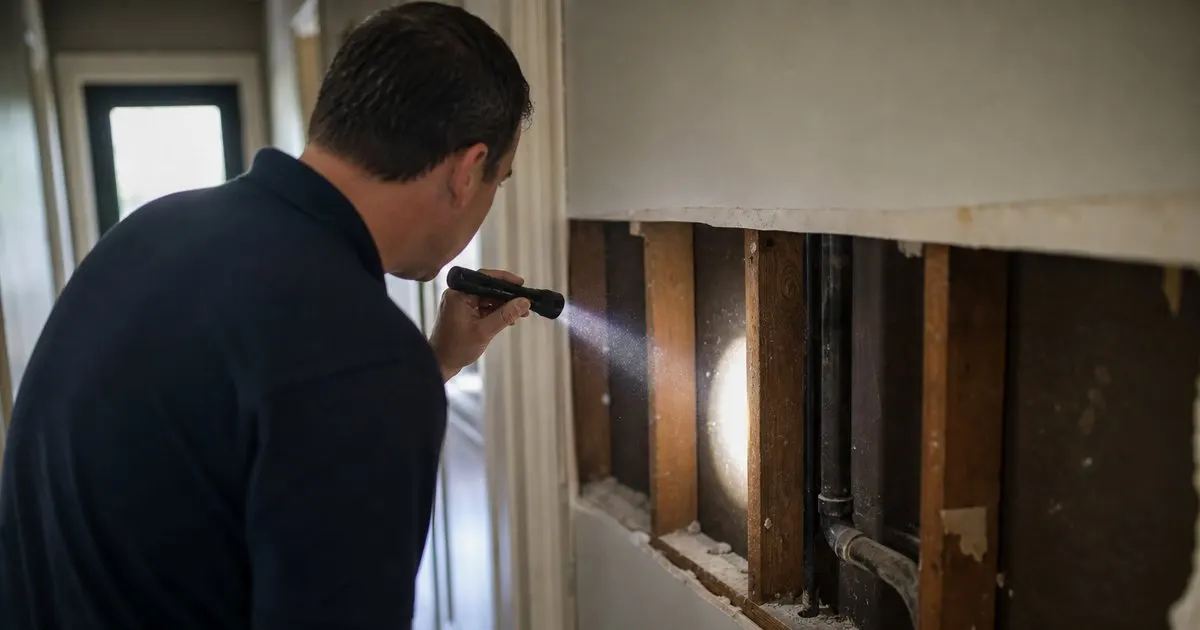
Name the unknown instead of guessing at it
The worst way to handle a hidden condition is to silently guess. If you pad the price to cover what might be there, you lose jobs to contractors who did not pad. If you price as if everything is fine, you eat the difference or fight about it later. Either way the customer never learns that there was an unknown at all.
The better way is to write the unknown into the quote in plain words. "This price assumes the existing drain line is in usable condition. If it is not, we will stop, show you, and price the repair separately." That sentence costs nothing, protects both sides, and signals experience. Customers trust a contractor who knows where the surprises usually hide. Related: Why the Fastest Quote Often Wins the Job
Keep reading: Why the Fastest Quote Often Wins the Job, Quoting on Site: The Advantages, Building a Price Book You Can Reuse. See how QuoteSnapr helps you photo-based quote and estimate builder for trade contractors.
Allowances, ranges, and exclusions, and when to use each
An allowance is a placeholder amount for something you will pin down later, common for finish selections and for a likely but unconfirmed repair. State the allowance amount, what it covers, and that the final will be adjusted up or down against it. A range with a not-to-exceed figure works when you can bound the problem: "between the low and high figure depending on extent, not to exceed the high figure without your approval."
An exclusion is different: it says a specific thing is not in the price at all. Exclusions belong on every quote that touches existing construction: mold remediation, asbestos abatement, code upgrades triggered by inspection, structural repairs, and permit fees where applicable. Listing them is not defensive. It is the clearest way to show what your number actually buys.
Investigate cheaply before you commit
A surprising amount of the unknown can be reduced with a few minutes and a camera. Pull a cover plate, look in the attic, run a borescope through a small hole, check the crawl space, photograph the panel. Take pictures of everything you inspected and everything you could not reach. Those photos go on the quote next to the assumptions they support. Related: How Photos Make a Quote More Persuasive
When the investigation itself is real work, quote it as a small first step: an exploratory opening with a fixed price, after which you provide the full quote with the wall open. Many customers prefer this because it turns one big uncertain number into a small certain one and then a well-informed one. A photo-based quoting tool makes the second quote fast because the pictures from the opening are already on file. Related: Quoting on Site: The Advantages
When you find it: the stop, show, price routine
However well you write the quote, sometimes you find the thing. Stop as soon as you safely can. Photograph the condition before you disturb it further, with something for scale. Show the customer, in person or by sending the pictures, and explain what it means in one or two sentences. Then price the additional work as a separate line or change order, referencing the assumption in the original quote.
Offer options where they exist: fix it now while the area is open, or close up and plan it later. Record the customer's choice. This routine works because it matches what the quote said would happen. There is no argument about whether the extra was fair because the quote predicted it, the photo proves it, and the customer chose the path. Related: Itemized Quotes and Why They Build Trust
- Write the assumption into the quote in plain words instead of padding or hoping.
- Use allowances for likely repairs, capped ranges for bounded unknowns, and exclusions for things you will not price.
- Spend a few minutes investigating with a flashlight and camera; photograph what you saw and what you could not reach.
- When you find a problem, stop, photograph, show the customer, then price it separately.

Julien Jimenez
Julien Jimenez is an independent software builder based in Paris. He designs, ships, and operates focused SaaS products for small businesses and independent professionals. Read the full author page.
Quote the job from the driveway
Photo-based quote and estimate builder for trade contractors. QuoteSnapr is built to help you put this into practice.
Build a quoteMore from the QuoteSnapr blog
Why the Fastest Quote Often Wins the Job

Quoting on Site: The Advantages
Building a Price Book You Can Reuse
Get the QuoteSnapr playbook
Practical guides on field quoting, straight to your inbox as we publish them. No spam, unsubscribe any time.