Why does offering three price options help a contractor close more residential jobs?
Good, better, best quoting is not a sales trick. Done honestly, it answers the customer's real question, which is usually some version of "what are my choices?"
The question customers are really asking
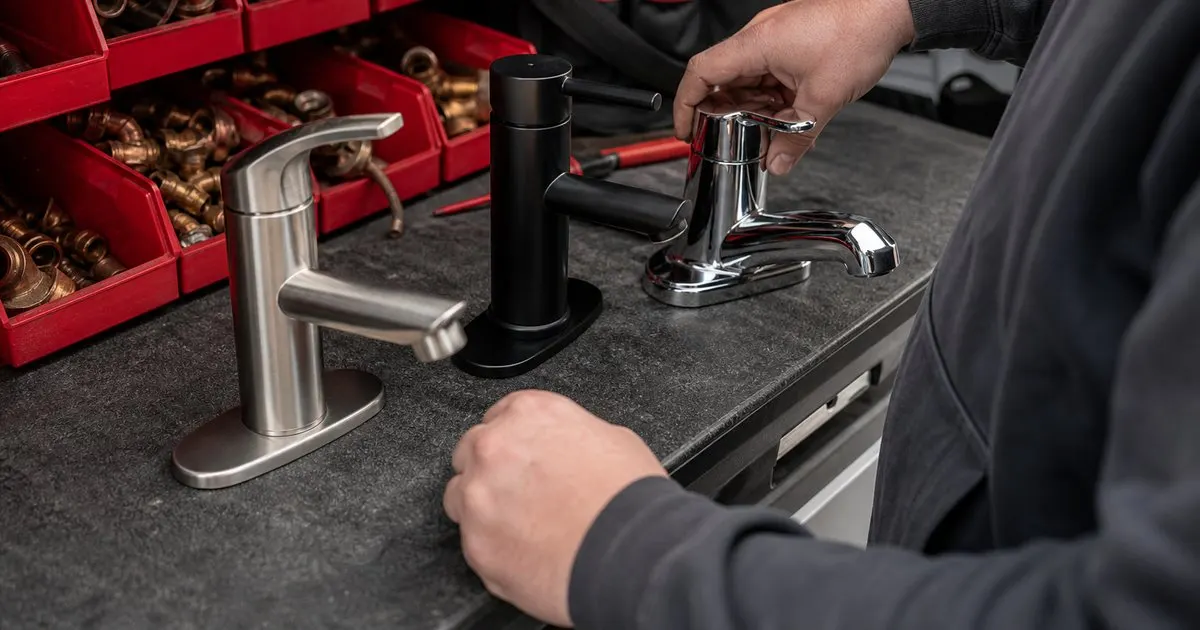
When a homeowner asks for a quote, the number is only part of what they want. They also want to know whether there is a cheaper way to solve the problem, whether spending more buys something meaningful, and whether you are steering them. A single-number quote answers none of that, so they go get two more quotes to build the comparison themselves. Related: Why the Fastest Quote Often Wins the Job
Three options put the comparison inside your quote. The basic tier solves the immediate problem. The middle tier adds the things you would honestly recommend. The top tier includes upgrades that make sense for some customers and not others. The customer picks their own level, which feels very different from being talked into one. Related: How Photos Make a Quote More Persuasive
Keep reading: Why the Fastest Quote Often Wins the Job, Quoting on Site: The Advantages, Building a Price Book You Can Reuse. See how QuoteSnapr helps you photo-based quote and estimate builder for trade contractors.
Building tiers that are honest, not padded
The rule is that every tier must be a job you would be proud to do. If the basic option is deliberately bad so the middle looks better, customers notice and it damages trust. Instead, define the basic tier as "the correct minimum," the middle as "what I would do at my own house," and the top as "if budget were not the main concern."
Differences should be concrete and visible on the quote: a longer-warranty unit, a better fixture finish, adding a shutoff valve, replacing the section of pipe that is close to failing rather than only the fitting that already failed. Photos help enormously. A picture of the aging valve next to the "better" line item makes the reason for the upgrade obvious without a sales pitch. Related: Following Up on a Quote Without Being Pushy
How tiers change the conversation on site
With options on the table, the conversation shifts from "is this price fair" to "which of these fits." That is a more comfortable conversation for the customer and for you. It also surfaces budget honestly: a customer who chooses basic today can be told what the middle tier would have added, and many come back to it on the next visit.
Tiers reduce the number of re-quotes, too. Without them, a customer who wants to trim the scope asks you to go back and redo the quote. With them, the trimmed version already exists. A quoting tool that lets you build the three tiers from the same base line items, adding or swapping a few lines, keeps this from tripling your quoting time. Related: Quoting on Site: The Advantages
When three options is the wrong move
Not every job wants tiers. Emergency repairs, tiny service calls, and work where there genuinely is only one correct approach are better served by a single clear price. Presenting options in those cases reads as indecision. Use tiers when there are real choices in materials, scope, or longevity, and skip them when there are not.
Keep the count at three or fewer. Five options create paralysis and invite endless customization. If you find yourself adding a fourth, ask whether one tier is really two separate add-ons, and offer those as optional line items the customer can check instead. Optional lines plus three tiers cover nearly every residential situation without overwhelming anyone.
- Three tiers answer the customer's unspoken question about what their choices are.
- Every tier must be a job you would be proud of; never pad a weak option to make another look good.
- Photos beside upgraded line items explain the difference without a sales pitch.
- Skip tiers on emergencies and single-solution jobs, and never go beyond three.

Julien Jimenez
Julien Jimenez is an independent software builder based in Paris. He designs, ships, and operates focused SaaS products for small businesses and independent professionals. Read the full author page.
Quote the job from the driveway
Photo-based quote and estimate builder for trade contractors. QuoteSnapr is built to help you put this into practice.
Build a quoteMore from the QuoteSnapr blog

Why the Fastest Quote Often Wins the Job

Quoting on Site: The Advantages
Building a Price Book You Can Reuse
Get the QuoteSnapr playbook
Practical guides on field quoting, straight to your inbox as we publish them. No spam, unsubscribe any time.